
Behaviour Collaborations
National Disability Insurance Scheme registered organisation delivering services in positive behaviour support plans and mental health counselling.


About Us
Behaviour Collaborations has been established in response to local community demand for quality disability support services with specialisation in behaviour support plans and improved daily living counselling.
We are a registered organisation that delivers services to participants on the National Disability Insurance Scheme. We are dedicated to always promoting dignity and respect and we work with you in collaboration to manage all aspects of your plan and goals. We promote non-toxic workplaces, inclusive hiring, cultural safety and awareness and your rights.

Our Services
Inclusive Positive Behaviour Support Plans
Developed in collaboration
Positive Behaviour Support plans are developed with the participant and the teams supporting the participant. Our aim as a collaborative team is to improve participant outcomes to see an increase in quality of life. We work from a strengths-based framework, and we build skills and develop strategies to reduce or eliminate restrictive practice and behaviours of concern.
Positive Behaviour Support Plans (PBSP’S) work with participants and stakeholders to develop plans to reduce and eliminate restrictive practice for people who access the NDIS.
Sometimes an interim report needs to be completed. This details the nature of a restrictive practice.
Your practitioner will work with you to help identify what your triggers are and what are the behaviours of concern.
Strategies will be developed to implement in the environment.
Data will be collected and used to support a hypothesis and make predictions.
You and your team will be supported throughout the journey.
Positive Behaviour Support Plans are created with respect, and they work to protect individuals, families, and service providers.
We use a person-centred approach.
We are transparent and open with all the work we do.
We create Functional Behaviour Assessments.
We work with individual strengths to increase the capacity of individuals, families, and carers.
Above all, WE COLLABORATE
-

Counselling
Our teams are qualified to deliver counselling in areas of mental health including substance issues, PTSD, anxiety, depression and trauma, acquired brain injury, foetal alcohol spectrum disorder, schizophrenia and other major mood or personality disorders. Qualified specialists can be matched to suit your needs.
Learn more about our counselling and mental health support

-

TelePBS
TelePBS is the delivery of Positive Behaviour Support via telepractice.
Telepractice is the delivery of services at a distance. While face-to-face videoconferencing is the go-to for many practitioners, telepractice can also include:
- audio-only videoconferencing
- chat box only videoconferencing
- telephone
- text messaging
- emailing
- or a combination of any of these.

-
Therapeutic Support / Play Therapy
This service is provided to assist participants aged from 7 years to apply their functional skills to improve participation and independence in daily, practical activities in areas such as language and communication, personal care, mobility and movement, interpersonal interactions, and community living.
Learn more about our play therapy services

-
Assessments & Reports
This is a great option for individuals who have an upcoming plan review, change of circumstances or seeking funding for Positive Behaviour Support. Assessments can be completed in one or two appointments with additional time to write the report.
Learn more about our NDIS reports and assessments

FAQs
Behaviour support is funded by the NDIS to help with reducing and eliminating restrictive practices, managing risk, and helping to reduce problematic behaviours. Restrictive practices include chemical restraints, environmental restraints, mechanical restraints, physical restraints, and seclusion restraints.
We focus on developing appropriate behaviour support plans that manage risk and promote safety and inclusivity for the participant and their team.
- A Behaviour Practitioner will work with you to define the issues/concerns, we will then create a plan that address the issues/concerns to reduce any impactful behaviour that is reducing the quality of lite for the participant.
- We develop safety plans to reduce any immediate risk to the participant and the team.
- We can help connect you to services.
- We can help you to develop an understanding of the NDIS and how to use funding in appropriate ways.
- An interim behaviour support plan is only developed if a participant is having restrictive practices. We will work closely with you in the first few weeks to determine if the restrictive practice can be stopped or if it needs to be approved.
- An interim behaviour support plan will incorporate proactive strategies to reduce the need to use a restrictive practice, and we will develop a safety plan for use when responding to significant behaviours of harm.
- Timeframe: An Interim must be submitted to the NDIS within 30 days from the point of contact.
- Every participant who received Behaviour Support funding is entitled to a plan. It is the policy of the NDIA that a Behaviour Practitioner must create a positive behaviour support plan as a part of their services. It is our obligation to ensure all participants engaged with our service are provided with a plan.
- The NDIS will also require that a practitioner let the NDIS know if there are problematic behaviours and teams and participants are at risk of harm.
- If there are no behaviours, we may just write a letter to let the NDIS know that a participant has been assessed as not needing behaviour support.
- Timeframe: Generally, we have 6 months to complete PBSP from point of contact or after an Interim has been submitted.
- The plan takes time to gather information from the participant, their families, other allied health professionals, schools, support workers and any other key stakeholders who are apart of the participants life. During this time the practitioner will continue to work on a comprehensive plan updating and added strategies as they go.
- A Functional Behaviour Assessment assesses a participant's domains of life in line with their diagnosis and makes recommendations.
- An FBA is generally needed when PBS funding is low, and further support is needed.
- Timeframe: Rule of thumb generally means an FBA is on a as and when needed basis.
Depending on what support is needed, we can continue to engage with you and your participant to provide ongoing behavioural support. This includes (but is not limited to) stakeholder engagement, training, and telehealth sessions.
- PBS funding is generally reviewed every 12 months, and therefore most participants will have us for a minimum timeframe of 12 months.
- However, subject to funding, our services can continue after this process. We have several participants that we have been supporting since 2021.
- We use a simple invoice processing system to save on admin time and reduce overheads, which means we do not have to charge extortionate amounts.
- Your invoices will note down if intervention or training work has been actioned.
- Intervention is inclusive of observations, email/phone correspondence, visits (and travel), case noting, behavioural monitoring, research, and report writing (see work stages below for further information).
- Training is inclusive of research, training deck preparation, training delivery, and recap training.
- No, your Behaviour Practitioner will work with you in very different ways. We are generally 95% hermits, and 5% extraverts! Our priority is reducing problematic behaviours and the use of restrictive practices and therefore, all attention is focused on how this can be achieved.
- A Behaviour Practitioner is known to work intensely with the participant's extended network in the early days of engagement.
- We may call and see you/your teams several times in the first month (but not weekly).
- However, once we gather a significant amount of information, we can go quiet for a short time to write the behaviour support plan, which will be worked on over a period of months. Making changes as we gather information and or behaviours increase or decrease.
- This is rare, but it can happen. Firstly, try to address your concerns with your Practitioner as they may not be aware of the issues, and are there first and foremost to work with you to achieve your goals and reduce behaviours of concern.
- If you need to escalate further, please contact our operations manager Sam Murray on sam@behaviourcollaborations.com to discuss other options. There is never a one-person-fits-all, so we understand that you may not find your practitioner to be the right fit and will work with you to ensure you find the right person.
Testimonials

Latest Blogs

Behaviour Support Plan: Why support worker notes matter
By Corinne |
If you support a participant day-to-day, the notes you take matter more than you may realise. A behaviour…

NDIS Behaviour Support Red Flags: 3 Signs Your Support Isn’t Working
By Corinne |
If your NDIS funding is being used but nothing is actually changing, it’s worth paying attention. In practice,…
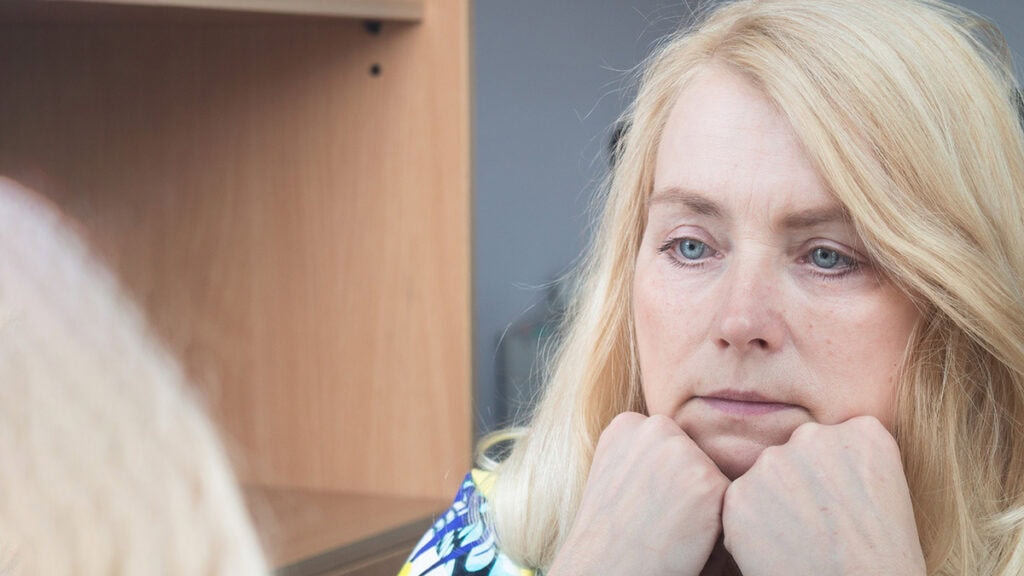
NDIS support worker rights: Why speaking up matters more than you think
By Corinne |
NDIS support worker rights matter when something does not feel right, and many support workers know the feeling…


Behaviour Collaborations and the National Disability Insurance Scheme (NDIS)
Behaviour Collaborations is a Registered NDIS Provider and complies with all Queensland and Commonwealth Government requirements for the delivery of quality and safe disability support services.
Behaviour Collaborations is a Registered NDIS Provider and complies with all Queensland and Commonwealth Government requirements for the delivery of quality and safe disability support services.
Contact Us
To get in touch please email info@behaviourcollaborations.com or call 07 3050 3353. Alternatively fill out the online form below and we will get in touch with you shortly.